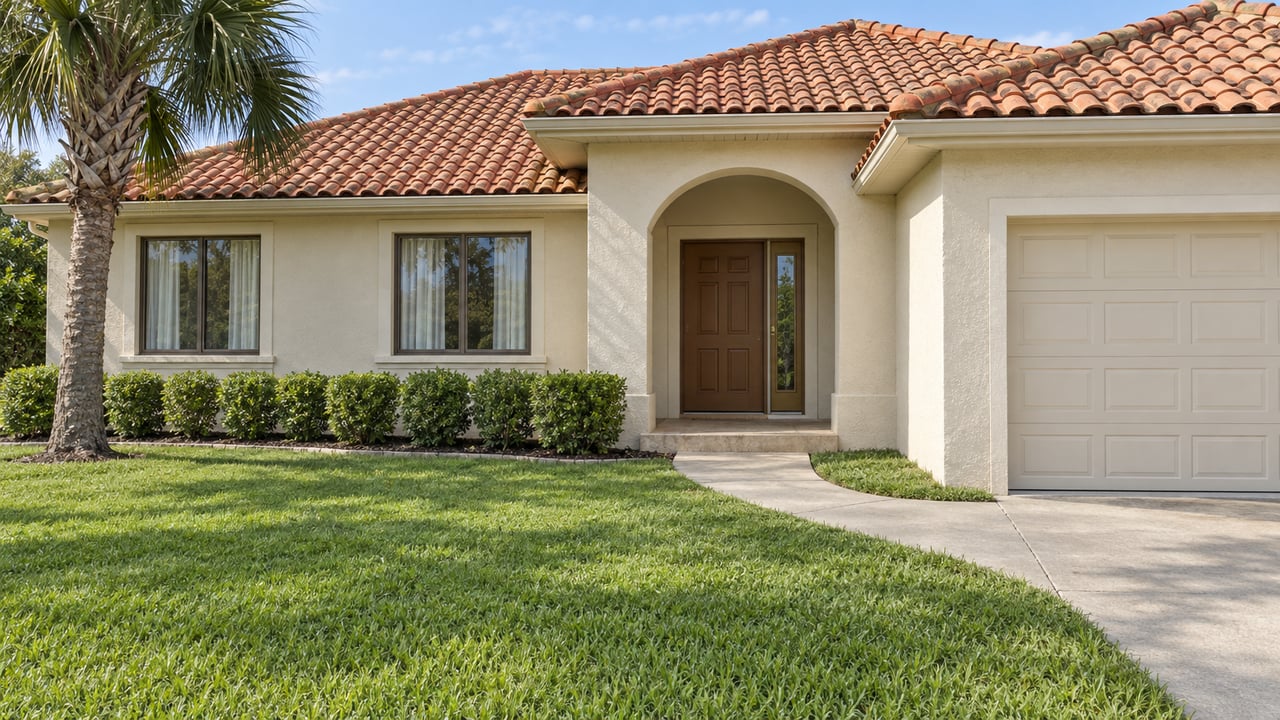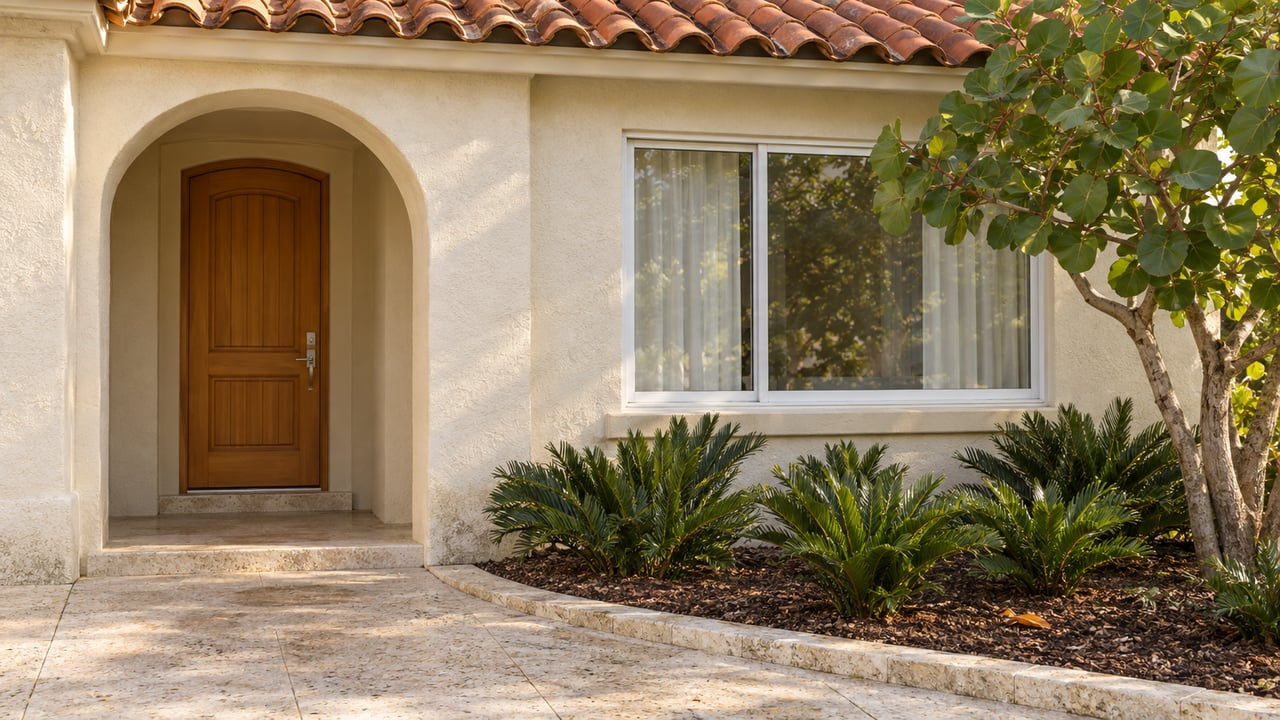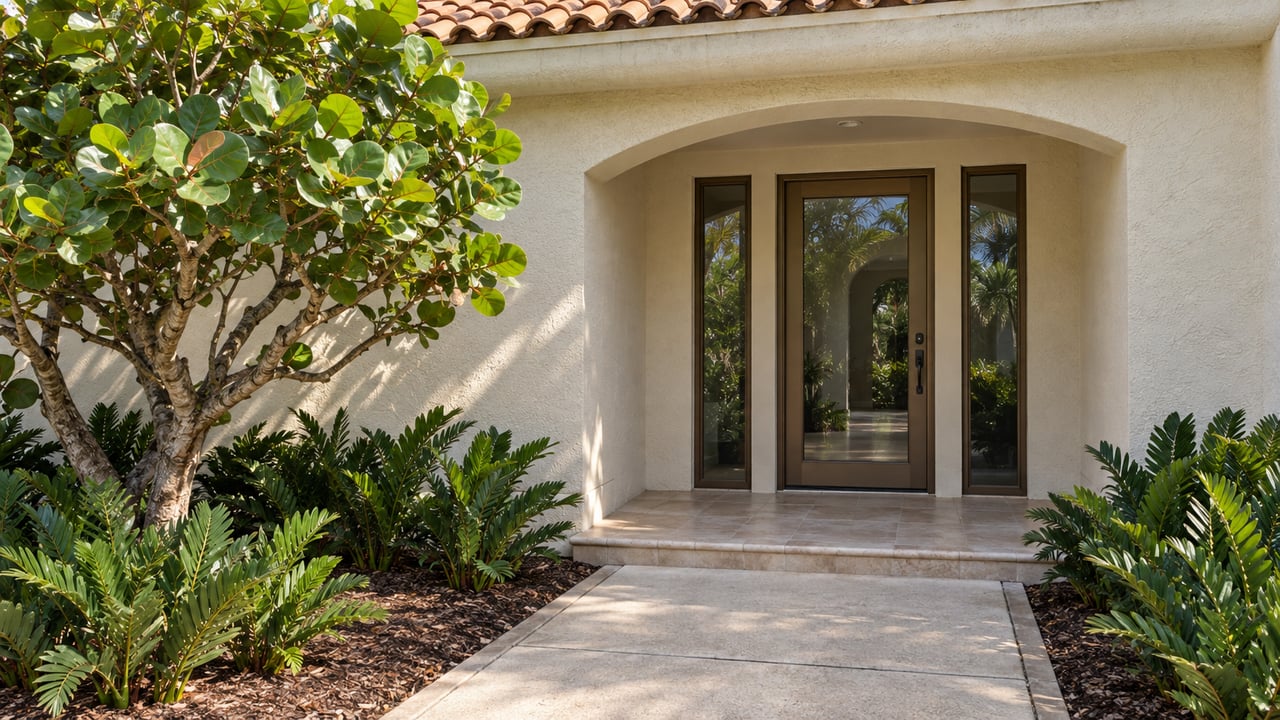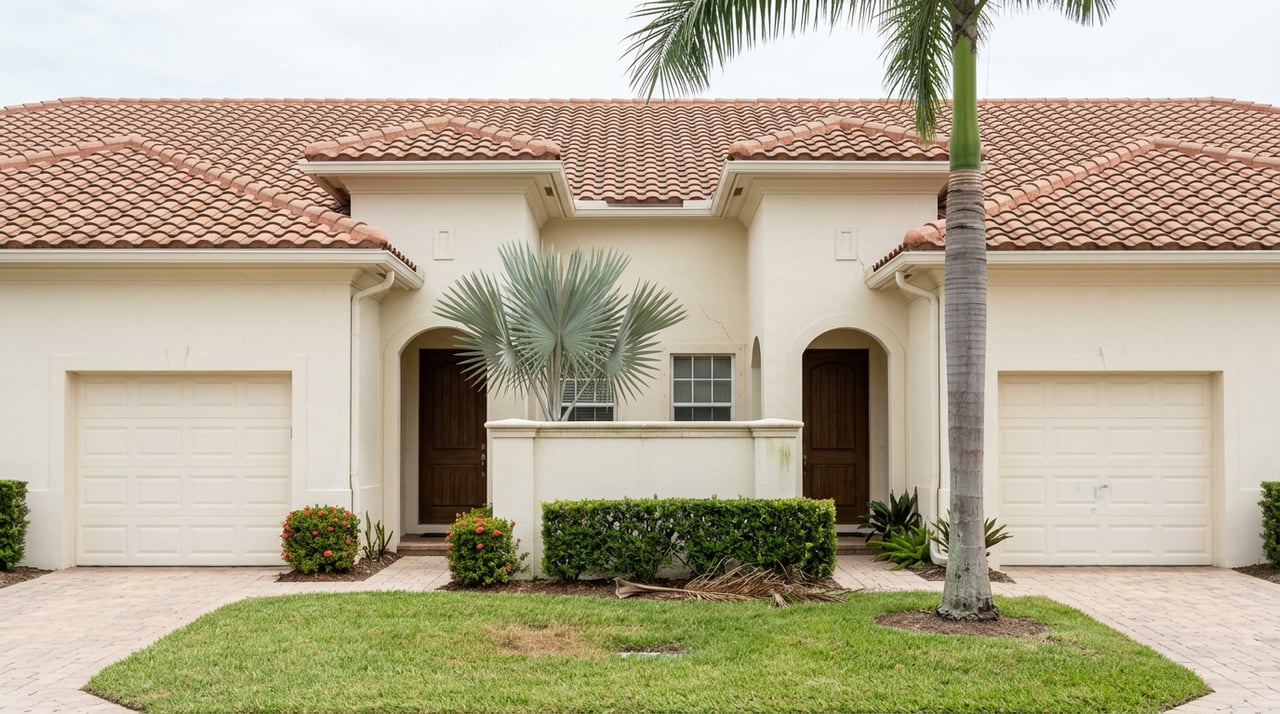
Picture two Estero listings sitting side by side on the same search results page. Both are $550,000. Both are three-bedroom homes with a two-car garage and a lanai. One is inside Verdana Village. The other is inside Corkscrew Shores. On paper, they look interchangeable.
Their list prices do not tell you everything about what each home costs to own. A home's fee structure can change its monthly payment and its cost over a ten-year hold.
The Fee Hiding Inside One Price Tag
The line item in question is a Community Development District assessment, usually shortened to CDD. A CDD is a special-purpose unit of local government, created under Florida Statutes Chapter 190, that a developer sets up to finance a community's roads, drainage, and amenities through bonds rather than folding those costs into the sticker price of every home. Once the bonds are sold, the district repays them through an annual assessment charged to every property inside its boundary. That assessment may be collected through your Lee County property tax bill as a non-ad valorem line, separate from the millage-based portion tied to your home's assessed value, or billed separately.
Across Southwest Florida's master-planned communities, that annual charge typically runs $1,500 to $3,500. In some of Estero's newer, amenity-heavy communities, when you stack the CDD on top of the HOA dues, the combined monthly hit can reach $500 to $1,000 or more. That is not a rounding error against a mortgage payment. It is a second housing cost living quietly next to the first.
Here is the part that changes how you should shop.
A home's price tag tells you what you'll borrow. A home's fee structure tells you what you'll actually pay every month for as long as you own it. Two buyers can sign the same purchase price and walk into two different financial lives.
One Assessment, Two Different Clocks
Most people who have heard of CDD fees think of them as one number. They are actually two, running on two different clocks, and confusing them is where a lot of the surprise at closing comes from.
| Component | What it funds |
|---|---|
| Debt service (the bond) | Repays the original infrastructure bonds, roads, stormwater systems, entry features, the clubhouse shell |
| Operations and maintenance (O&M) | Landscaping, pool and amenity operations, utilities, insurance, district management |
This distinction matters more than the total dollar figure does. Two homes might show an identical number on this year's tax bill. They are not the same obligation, and a buyer comparing "the CDD fee" as a static line without asking how much bond term is left is comparing two different things as though they were one.
CDD Fees Across Estero
Not every Estero community sits on the same side of this. Some carry a CDD. Some were built or marketed specifically without one, and that absence has become a selling point in itself.
Verdana Village is the large Cameratta Companies development along Corkscrew Road with homes built by Lennar and Pulte, and Bella Terra is an established master-planned community built mainly in the 2000s.
Corkscrew Shores is a 722-acre gated community built around a 240-acre lake with dining at The Captain's Club, and Genova is a condo and townhome community near Coconut Point aimed at downsizers and seasonal owners. Corkscrew Estates is a newer-construction pocket on larger lots.
None of this makes one side of the line better than the other. A CDD funds real things. Estero's own development record shows what that spending looks like in practice: Copperleaf at The Brooks recently completed a clubhouse expansion that added a pool café, additional parking, and a third bocce court, and the intersection of Corkscrew Road and the road planners' newly named Spine Road is under active construction for a traffic signal expected to go live this fall, according to Engage Estero's development tracking. Someone paying a CDD assessment in a newer community is, in effect, financing amenities and roads that an older or CDD-free community either already paid for outright or funds a different way, often through higher HOA dues instead.
The point is not to avoid CDD communities. The point is that "no CDD" is not automatically "cheaper," and "has a CDD" is not automatically "more expensive." You have to look at what each fee structure buys and how long it lasts before you can compare two price tags honestly.
The Part That Can Move Your Mortgage Before You Ever See a Rate Sheet
Here is the friction that catches people during underwriting, not during the home tour.
NOWTB's CDD guide says lenders include the CDD assessment in your debt-to-income ratio, the same way they include your HOA dues and property taxes. That means two buyers with identical income and identical purchase prices can qualify for different loan amounts depending on which Estero community they choose. A buyer stretching toward their maximum approved payment on a CDD-free property in Corkscrew Shores may find that the same stretch does not clear underwriting on a comparably priced home in Verdana Village once the district assessment gets added to the monthly obligation column.
This is worth raising with your lender before you fall for a specific house, not after. Ask directly how the lender treats the CDD assessment in your qualification math, because the answer changes what price range you should actually be shopping.
Running the Math Over the Years You'll Actually Own the Home
As of June 2026, the average home value in Estero stood at roughly $520,000, and the market has settled into a slower, more balanced pace than the frantic years right after the pandemic. That gives buyers more room to negotiate than they had a few years ago, which makes this a good time to negotiate on the right thing.
Run the comparison over the length of time you actually plan to own the home rather than over a single tax year. A $2,800 annual CDD assessment on a home you keep for eight years is $22,400 in obligations that a CDD-free comparable in the same price range never asks you to carry, even before you account for whatever the O&M portion does to that number along the way. Weigh that figure against what the CDD funded. If it built the resort pool, the pickleball complex, and the retail center at your front gate, you may decide the trade is worth it. If it financed infrastructure you would have gotten anyway through a higher HOA in an older community, the math looks different.
Either way, this is a negotiation lever most buyers never pull because they never see the number clearly enough to raise it.
What I Ask For Before We Write an Offer
When a fee structure this consequential sits behind a single line on a listing sheet, I do not let a client rely on that line alone. Before we put a number on paper, I request:
- The bond amortization schedule, so we know exactly how many years of debt service remain on that specific lot, not the district average
- The district's most recent adopted budget, so we can see whether O&M has been trending up, flat, or down
- Confirmation of billing method, since some districts collect through the tax bill and others bill separately
- The engineer's report, which spells out what the bond actually financed
- Written confirmation from the lender on how the assessment factors into debt-to-income before we lock in a target price range
That paperwork takes a phone call and a few days. Skipping it costs you the leverage to negotiate and, in some cases, the ability to qualify for the home you thought you could afford.
Can I pay off the CDD bond early?
In many districts, yes. You contact the district manager for a payoff figure and can prepay the remaining debt service in a lump sum. It typically costs tens of thousands of dollars upfront, and if you plan to sell before the bond would have matured anyway, you may not recoup the benefit.
Does a CDD-free community mean lower total fees overall?
Not necessarily. Communities without a CDD often carry higher HOA dues instead, since the infrastructure and amenities still had to be paid for by someone. Compare the combined HOA and CDD obligation, not just the presence or absence of the district line.
If you are weighing Estero communities against each other and want the real fee picture on a specific address before you write an offer, I would rather pull that paperwork with you now than have you discover it during underwriting. Reach out to Jason Armstead and let's get your free home valuation and a clear read on what a specific Estero property will actually cost you to carry.
This article is general information, not legal, tax or financial advice. Consult a qualified professional about your situation.