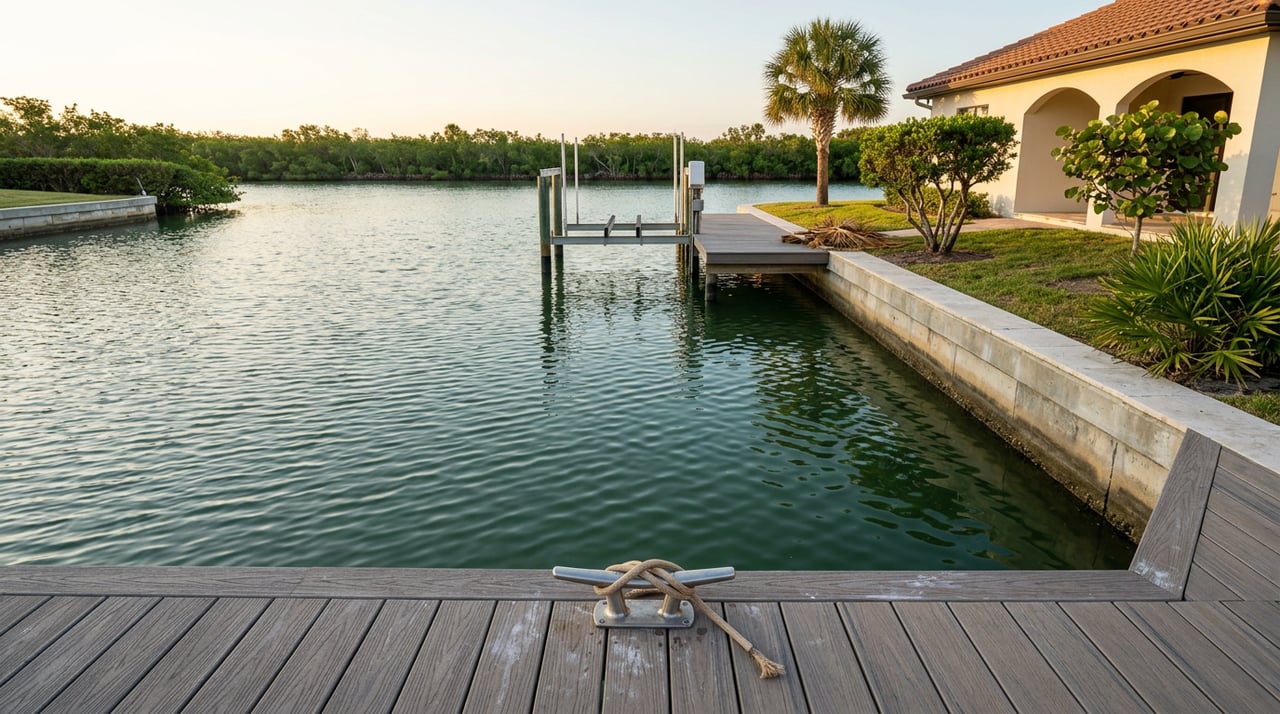
The dock at Kirk Fish Company on Papaya Street in Goodland starts moving before most of the island is awake. Boats idle in from Buzzards Bay with the morning's catch, and the first thing anyone at the fish house checks isn't the count. It's the size.
If the early traps are pulling colossals, the largest claw grade there is, the whole season gets talked about differently. That's not folklore. It's how the Kirk family, who have run the only fishery in the Goodland-Marco Island area since 1950, actually forecast the months ahead. A strong opening week of big claws tends to mean a strong season. A slow start that builds usually means exactly that, a slow build. Either way, the read happens in October, at the dock, before a single claw reaches a restaurant table on the island.
That's the piece of this ritual most people miss. Everyone knows stone crab season opens October 15. Fewer people know there's a real early signal, coming from a specific family business, that tells locals what kind of season they're walking into.
One Fishery, Six Generations
Kirk Fish Company isn't one option among several for dock-direct claws on this end of the island. It's the only one. The business traces back to Bud and Kappy Kirk, two of Goodland's original settlers who moved their whole house down from Caxambas in the late 1940s. Today it's run by Kelly Kirk alongside her parents, Damas and Patty, with a crew that includes fourth-generation crabber Tyler Few and 82-year-old Bill Pilger, who's still setting traps decades into the job. Daniel Doxsee, whose family ran the old Doxsee Clam Factory starting in 1911, works the boat he calls Endangered Species.
That density of local history in one small seafood market is part of why the claw report from opening week carries weight on Marco Island. It isn't a marketing line. It's a family that has watched this fishery for most of a century telling you what the traps are showing right now.
What the Grades Actually Mean
Stone crab claws are sorted by size into medium, large, jumbo, and colossal, with colossal running about two claws to the pound or fewer. The bigger grades cost more, but size isn't cosmetic. It's also the fastest way to tell, at a glance, whether you're looking at a claw from early in its regrowth cycle or one that's had a full year or more to build back up.
That regrowth is the whole reason this fishery still exists in a form recognizable from the 1950s. Harvesters take a single claw and return the live crab to the water, where it starts regenerating within 30 to 90 days and reaches legal harvest size again within one to three years, according to Kirk Fish Company's own account of the process. Florida's Fish and Wildlife Conservation Commission sets the season at October 15 through May 1 every year specifically to give that cycle room to work, along with a minimum claw length of 2 7/8 inches and required escape rings on every trap so undersized crabs and bycatch can get out.
The Two Ways Locals Actually Get Theirs
There are really two separate stone crab experiences on the island, and residents tend to pick a lane depending on the night.
The first is the market run. Kirk Fish Company sells by the pound and will crack the claws to order, which means the transaction is closer to a fish counter than a restaurant tab. It sits right next to Little Bar Restaurant, close enough that a market run and a sit-down dinner can happen back to back if that's the plan.
The second is dinner out, and the island has no shortage of rooms built around this season. On the water side, CJ's on the Bay and Snook Inn both put claws in front of a Marco River sunset. Pinchers and Deep Lagoon Seafood and Oyster House run it as a full seafood menu rather than a single seasonal item. The Oyster Society, Fin Bistro, Mango's Dockside Bistro, and Quinn's on the Beach round out the rotation, and Paradise Seafood & Gourmet Market gives another market option if a home-cracked dinner is the goal instead of a reservation.
None of these are competing versions of the same thing. A dock run gets you the freshest claws at the lowest markup, cracked while you wait. A restaurant seat gets you the view, the wine list, and someone else doing the cracking. Most people on the island end up doing both over the course of a season, just not on the same night.
Reading the Season Like a Local
Here's where the early signal actually pays off for someone who isn't in the seafood business. If opening week is running colossal, that's the window to go early and go often, because supply and quality both tend to be strongest right out of the gate. If the season opens slow and builds, patience is the better strategy. Waiting a few weeks into November often means better claws for the same price, not worse.
That's a different way to plan a season than "go whenever." It's the difference between treating stone crab as a fixed menu item that shows up every October and treating it as a fishery with its own rhythm, one that the people running the boats can read within days of the traps going back in the water.
What This Means for the Rest of the Season
The season runs seven months, from October 15 through May 1, and closes hard on May 2. There's no soft landing at the end. Boats come in, the last claws sell, and Kirk Fish Company and the rest of the island's markets go quiet on stone crab until the following October. That closing date matters as much as the opener, because the same logic applies in reverse. Late-season claws, right before the close, are often the biggest of the year, since crabs harvested earlier in the season have had months to regenerate.
So the calendar itself has two high points worth knowing if you live here: the early read in mid-October that tells you what kind of season this is, and the final weeks before May 1 when the claws tend to run large one more time before the traps come out of the water for the summer.
None of this requires a reservation app or a tourist guide. It requires knowing which dock to watch and which family has been reading these waters long enough to trust their read.
If you're weighing what a season like this means for property along the water, or you're just curious what a home near Goodland or the rest of Marco Island might be worth this year, Jason Armstead is always glad to talk through it over an actual conversation, not a form. No pressure, just a neighbor who knows the island as well as the crabbers do.